

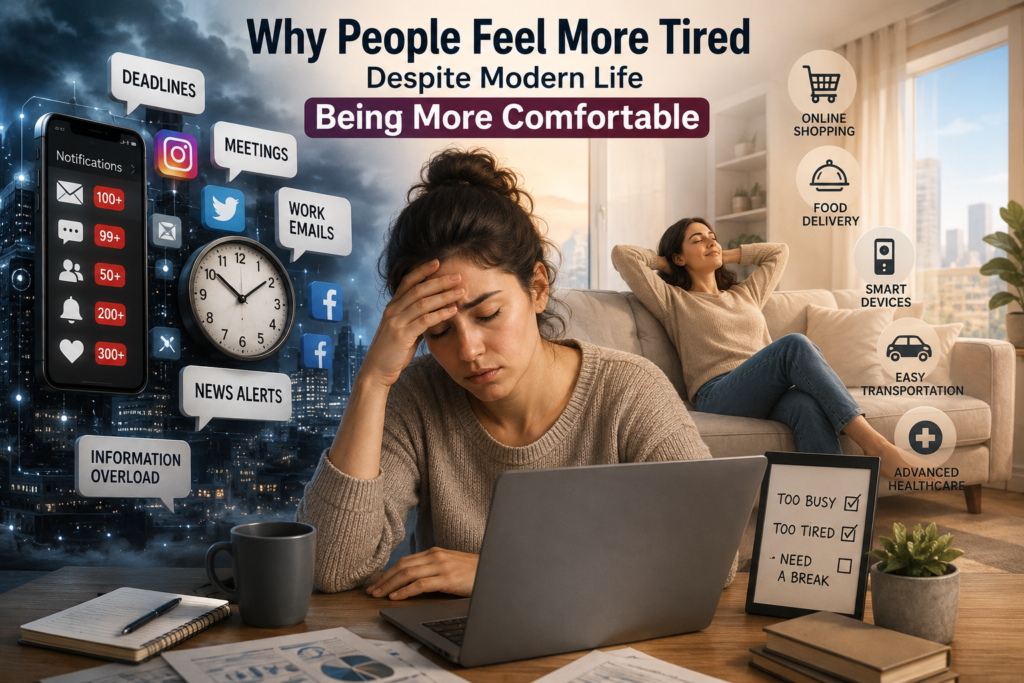
Modern life has given us comforts that previous generations could only dream of. Air-conditioned homes, online shopping, food delivery, smart devices, high-speed transportation, and advanced healthcare have made daily life easier than ever. Yet, despite these conveniences, many people feel more exhausted, stressed, and mentally drained than before.
Why does comfort not automatically lead to more energy and happiness? The answer lies in how modern lifestyles affect our minds and bodies.
1. Information Overload
A century ago, people received information from newspapers, conversations, and books. Today, we are constantly exposed to:
- Social media updates
- News notifications
- Emails and messages
- Work-related communications
- Online advertisements
Our brains are processing thousands of pieces of information every day. This continuous mental activity creates cognitive fatigue, making us feel tired even when we haven’t done much physical work.
2. Lack of Physical Activity
Modern technology has reduced the need for physical movement.
Today, people:
- Work at desks for long hours
- Use elevators instead of stairs
- Drive instead of walking
- Order food instead of cooking
While these conveniences save effort, the human body was designed for movement. Regular physical activity boosts energy, improves mood, and enhances sleep quality. A sedentary lifestyle often leads to low energy levels and chronic fatigue.
3. Poor Sleep Habits
Many people stay awake late at night scrolling through social media, watching videos, or working on digital devices.
The blue light emitted by screens interferes with the body’s natural sleep cycle. As a result:
- Falling asleep becomes harder
- Sleep quality decreases
- Morning fatigue increases
Even when people spend enough hours in bed, they may not get restorative sleep.
4. Constant Connectivity Creates Constant Stress
Technology allows us to be connected 24/7.
Work emails arrive after office hours. Messages demand immediate responses. Social media creates pressure to stay updated.
Unlike previous generations, many people never truly disconnect. The brain remains in a state of alertness, which increases stress hormones and contributes to mental exhaustion.
5. The Comparison Trap
Social media often shows the highlights of other people’s lives:
- Luxury vacations
- Career achievements
- Fitness transformations
- Expensive lifestyles
Constant comparison can create feelings of inadequacy and anxiety.
Even when life is comfortable, people may feel dissatisfied because they are measuring themselves against unrealistic standards presented online.
6. Mental Work Has Replaced Physical Work
In the past, many jobs involved physical labor. Today, a large portion of work is mental:
- Decision-making
- Problem-solving
- Data analysis
- Managing multiple tasks
Mental exhaustion is often less visible than physical exhaustion, but it can be equally draining. Many people finish the day feeling tired despite having sat in a chair for most of it.
7. Too Many Choices
Modern life offers endless options:
- Hundreds of TV shows
- Thousands of products
- Countless career paths
- Unlimited online content
While choice provides freedom, it also creates decision fatigue.
The more decisions people make throughout the day, the more mental energy they consume.
8. Reduced Human Connection
Technology has improved communication but not always meaningful relationships.
Many people have:
- Hundreds of online connections
- Few close friendships
- Limited face-to-face interaction
Human beings thrive on genuine social connection. Loneliness and isolation can contribute significantly to emotional exhaustion.
9. Always Chasing More
Modern culture often promotes the idea that success means:
- More money
- More achievements
- More possessions
- More productivity
As a result, many people feel they must constantly work harder and do more. This endless pursuit can lead to burnout, even when basic needs are already met.
Conclusion
Modern life is undoubtedly more comfortable, but comfort alone does not guarantee well-being. The human mind and body still need movement, quality sleep, meaningful relationships, purpose, and periods of rest.
The real challenge of the modern world is not surviving physical hardships. It is learning how to manage information, stress, technology, and expectations.
In a world designed for convenience, the greatest skill may be knowing when to slow down.
Comfort has reduced physical effort, but modern lifestyles have increased mental load. That is why many people feel more tired than ever before. 🌱
#MentalHealth #ModernLife #StressManagement #HealthyLifestyle #Productivity #WorkLifeBalance #SelfCare #MentalWellness
#LifeBalance #WellBeing
#LifeLessons #DailyMotivation #Motivation #SuccessMindset #GrowthMindset #HealthyLiving #MentalStrength #StressFreeLife #PositiveHabits
#BetterLiving







Leave a Reply