
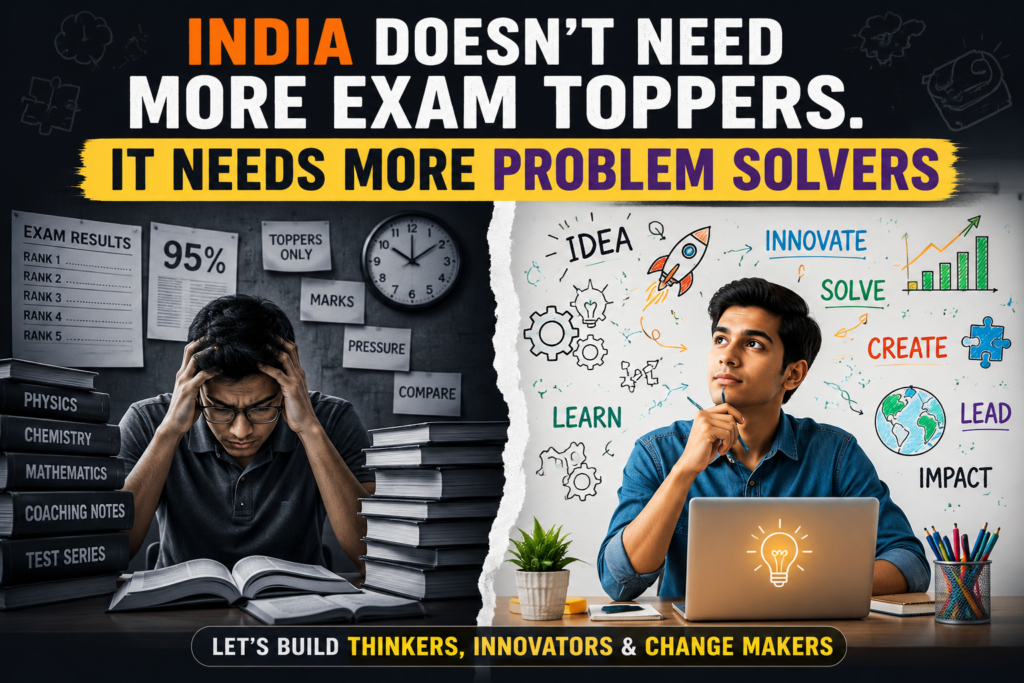

For decades, India’s education system has been measured by marks, ranks, and board exam results. Every year, newspapers celebrate toppers, coaching institutes advertise success stories, and parents compare report cards. Yet a fundamental question remains unanswered:
If our education system is producing so many high-scoring students, why are employers still struggling to find job-ready talent?
The reality is uncomfortable. India’s education system was designed for a different era. It was built to create clerks, administrators, and workers for an industrial economy. Today, we live in a world driven by artificial intelligence, innovation, entrepreneurship, and rapidly changing technology. Unfortunately, much of our educational structure has failed to evolve at the same pace.
The Marks Obsession
From a young age, students are taught that marks define their worth. Success is measured by percentages rather than understanding. As a result, many students focus on memorizing answers instead of developing critical thinking skills.
A student may score 95% in an examination but struggle to solve a real-world problem, communicate effectively, or work collaboratively in a team.
Education should develop thinkers, creators, innovators, and leaders, not just excellent test-takers.
The Rise of the Coaching Industry
One of the biggest indicators of systemic failure is the growth of coaching centers.
If schools alone were sufficient, why would millions of students spend additional hours and significant amounts of money on coaching?
For many families, school education has become secondary while coaching institutes have become the primary source of learning. This creates enormous pressure on students and increases educational inequality between those who can afford coaching and those who cannot.
Education Has Become Expensive
Private schools and colleges continue to increase fees every year. Parents often make significant financial sacrifices hoping to secure better opportunities for their children.
However, higher fees do not always translate into better learning outcomes. Modern buildings, air-conditioned classrooms, and smart boards cannot replace quality teaching and practical learning experiences.
Education should be accessible and affordable, not a luxury available only to a select few.
Skills Are Missing
Many graduates leave college without practical skills required in today’s economy.
Students should be learning:
• Financial literacy
• Communication skills
• Entrepreneurship
• Digital marketing
• Artificial Intelligence
• Cybersecurity
• Problem-solving techniques
• Leadership and teamwork
Unfortunately, these essential skills are often treated as optional rather than fundamental.
What India Needs
A modern education system should focus on:
Skill-Based Learning
Students should learn by doing. Real projects, practical assignments, internships, and industry exposure should become a regular part of education.
Technology Integration
Artificial Intelligence, coding, automation, and digital tools should be introduced early so students can prepare for future careers.
Teacher Development
Teachers are the foundation of any education system. Continuous training and professional development should be prioritized.
Reduced Exam Pressure
Assessment should include projects, presentations, practical work, and innovation rather than relying entirely on written examinations.
Entrepreneurship Education
Students should be encouraged to create solutions, build businesses, and think independently rather than only preparing for jobs.
The Future Classroom
Imagine a classroom where students:
• Build real products and solutions.
• Learn how businesses operate.
• Understand personal finance and investments.
• Use AI tools responsibly.
• Participate in community projects.
• Develop communication and leadership skills.
Such a system would prepare students not only for examinations but also for life.
Conclusion
India’s greatest resource is not its natural wealth. It is its young population.
The question is not whether our students are capable. They are.
The real question is whether our education system is helping them reach their full potential.
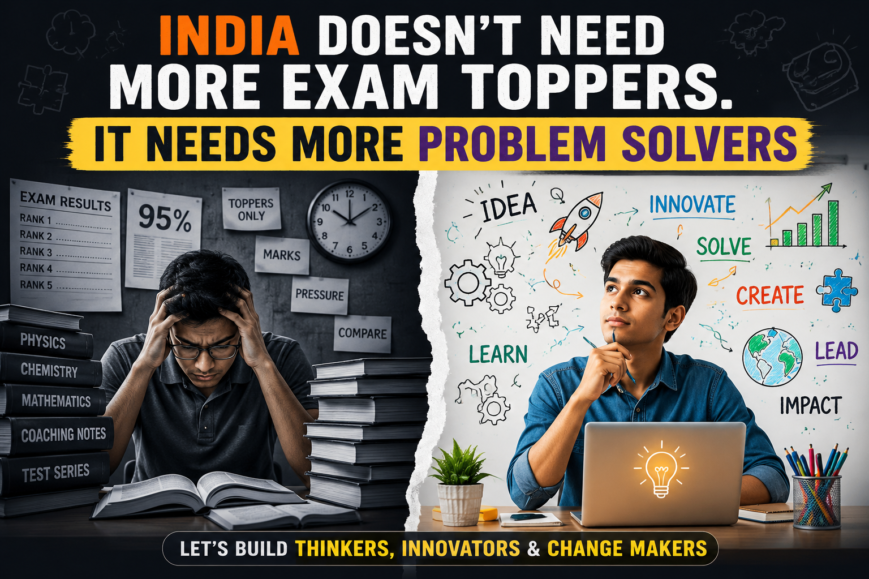
India does not need more exam toppers.
India needs problem solvers, innovators, entrepreneurs, researchers, and responsible citizens who can shape the future.
The time has come to move beyond marks and begin measuring what truly matters: knowledge, skills, creativity, and impact.
#India#NewIndia#ViksitBharat#SochtaBharat#IndianStudents#IndianYouth#Bharat
#YouthOfIndia#EducationInIndia#India2047#SkillDevelopment#FutureSkills
#DigitalSkills#AISkills#Entrepreneurship#Innovation#CareerGrowth#YouthDevelopment#LeadershipSkills#ProblemSolving#SkillDevelopment#FutureSkills#DigitalSkills#AISkills#Entrepreneurship#Innovation#CareerGrowth#YouthDevelopment#LeadershipSkills#ProblemSolving



Leave a Reply